
No Public Sherman County Warrant Portal
No official public Sherman County active warrant search page was located in the county, court, sheriff, or state sources used for this build. That fact changes the way Sherman County warrant records should be checked. The first step is not a name search box. The first step is choosing the likely source: the Sheriff's Office for enforcement and public-safety routing, the Circuit Court for bench warrants tied to state court cases, Justice Court for traffic or civil-violation failures to appear, or a city court if the citation came from a city matter.
The Sherman County Sheriff's Office contact page gives the local law-enforcement contact route. The office is at 500 Court Street in Moro, and the research file lists Sheriff James Burgett as the current sheriff. Emergency issues go to 911. Routine warrant questions should use the office phone or non-emergency routing, because a warrant record can involve arrest risk, a court appearance, a bail amount, or a hold from another agency.
Because there is no public countywide warrant search portal, the fallback chain matters more than any single lookup. Use the office or court that can confirm the live status before making plans around bail, travel, employment screening, or a voluntary appearance.
The sheriff contact page is the best source for the local office location and phone routing.
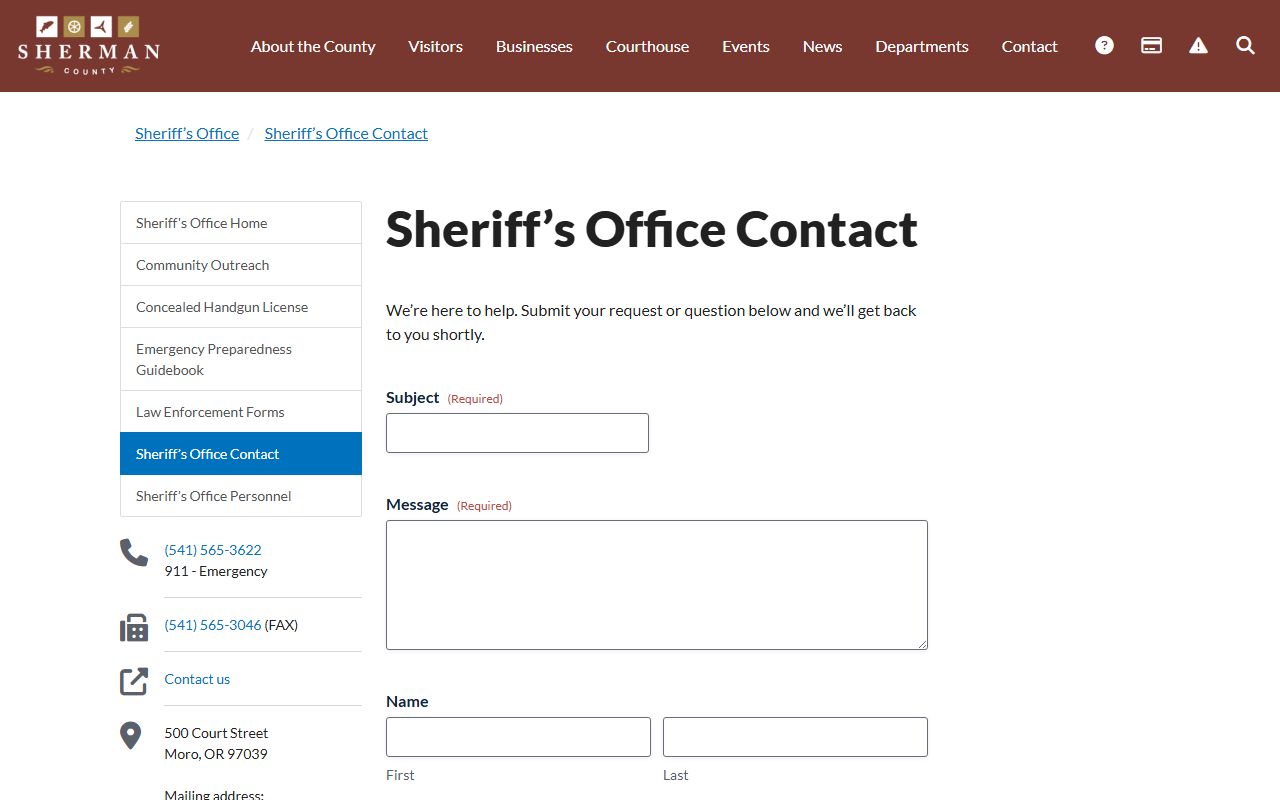
That source supports the page's main rule: when no public warrant database exists, start with the sheriff or the issuing court rather than an unofficial list.
Sherman County Warrant Search Fallback
Sherman County warrant records can come from several official places. A criminal arrest warrant or a warrant tied to a Circuit Court case may be reflected in the Oregon court register or handled by Sherman Circuit Court. A traffic or violation failure to appear may belong to Sherman County Justice Court. A person already in custody may appear on the NORCOR Adults in Custody roster with a charge line that hints at a bench warrant or fugitive hold. State law-enforcement systems may also hold the warrant, but Oregon LEDS is not a public self-service tool.
- Call the Sheriff's Office for local enforcement routing, active safety concerns, or report-record questions.
- Check the issuing paperwork for Circuit Court, Justice Court, or a city court name before contacting the court.
- Review NORCOR custody status if the person may already be detained or released within the last 24 hours.
- Ask the court whether bail, a personal appearance, a new hearing date, or attorney contact is needed.
- Confirm clearance with the court after payment, appearance, or release, because database updates may lag.
This chain also protects against stale warrant information. A roster line may show a booking charge, but it is not the same as a live warrant confirmation. A court docket may show a bench-warrant event, but the clerk or court should confirm the current status. If the matter may involve arrest, legal advice should come from a lawyer, not from court or sheriff staff.
Important: Do not appear at an office on an active warrant without first asking about arrest, bail, and court-appearance requirements.
Types of Sherman County Warrants
Warrant terms are not all the same. In Sherman County, the record path depends on the reason for the warrant and the court or agency that issued it. ORS Chapter 133 is the key Oregon statute set for arrest, citation, and warrant procedure, while court registers and jail roster entries may show only short labels. A brief term check helps a reader avoid treating every warrant as the same type of record.
- Arrest warrant means a judge has authorized arrest in connection with a criminal matter.
- Bench warrant is judge-issued and often follows failure to appear, contempt, release violations, or noncompliance.
- Search warrant authorizes a search and is often not public while an investigation is active.
- Fugitive warrant or hold may involve another state or federal agency, which can appear as a custody charge.
- Protection-order related hold may relate to contempt or restraining-order violation allegations.
ORS Chapter 133 supplies the Oregon arrest and warrant procedure backdrop for Sherman County warrant records.
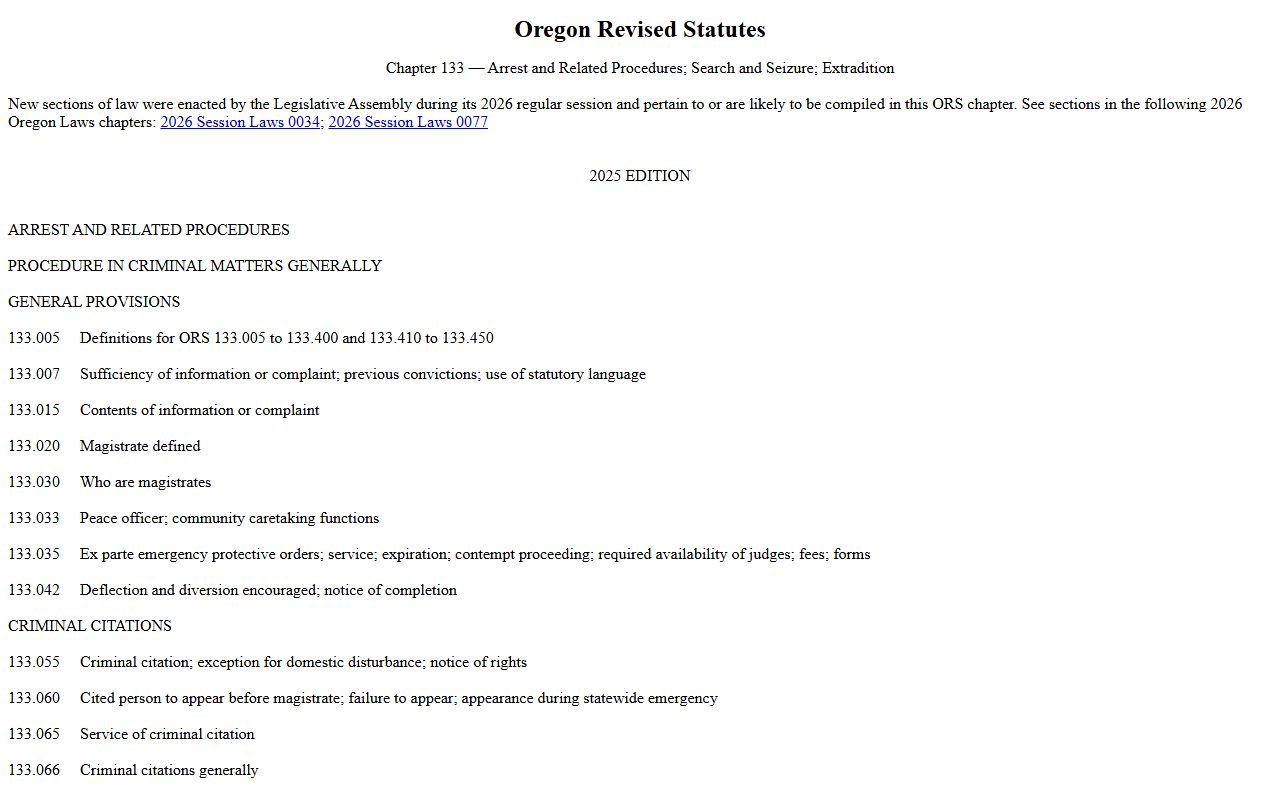
The statute source is useful for procedure, but live warrant status still comes from the court, sheriff, or custody agency involved.
Sherman County Warrant Search Fields
Since no public Sherman County warrant search form was found, the useful field inventory is a channel table rather than a database screen. These are the facts a caller or requester should gather before contacting the sheriff, court, or NORCOR. Exact fields may differ by office, but the research supports these access points and the records each one can help confirm.
| Channel | Best Search Detail | Required | Notes |
|---|---|---|---|
| Sheriff | Full name, date of birth if known, case or citation number if known | Usually yes | Use for local enforcement and records routing. |
| Circuit Court | Case number, defendant name, hearing or warrant event | Best if known | Bench warrants may appear in case registers. |
| Justice Court | Citation number, name, scheduled court date | Best if known | Traffic and civil-violation failures to appear may route here. |
| NORCOR roster | Name on roster, booking date, charge text | No search box shown | Roster is a public table, not a warrant database. |
| LEDS | Law-enforcement query only | Not public | Oregon State Police describes LEDS as a law-enforcement database. |
Oregon State Police describes LEDS as a system that includes warrants, protection orders, criminal histories, stolen property, and investigative files.
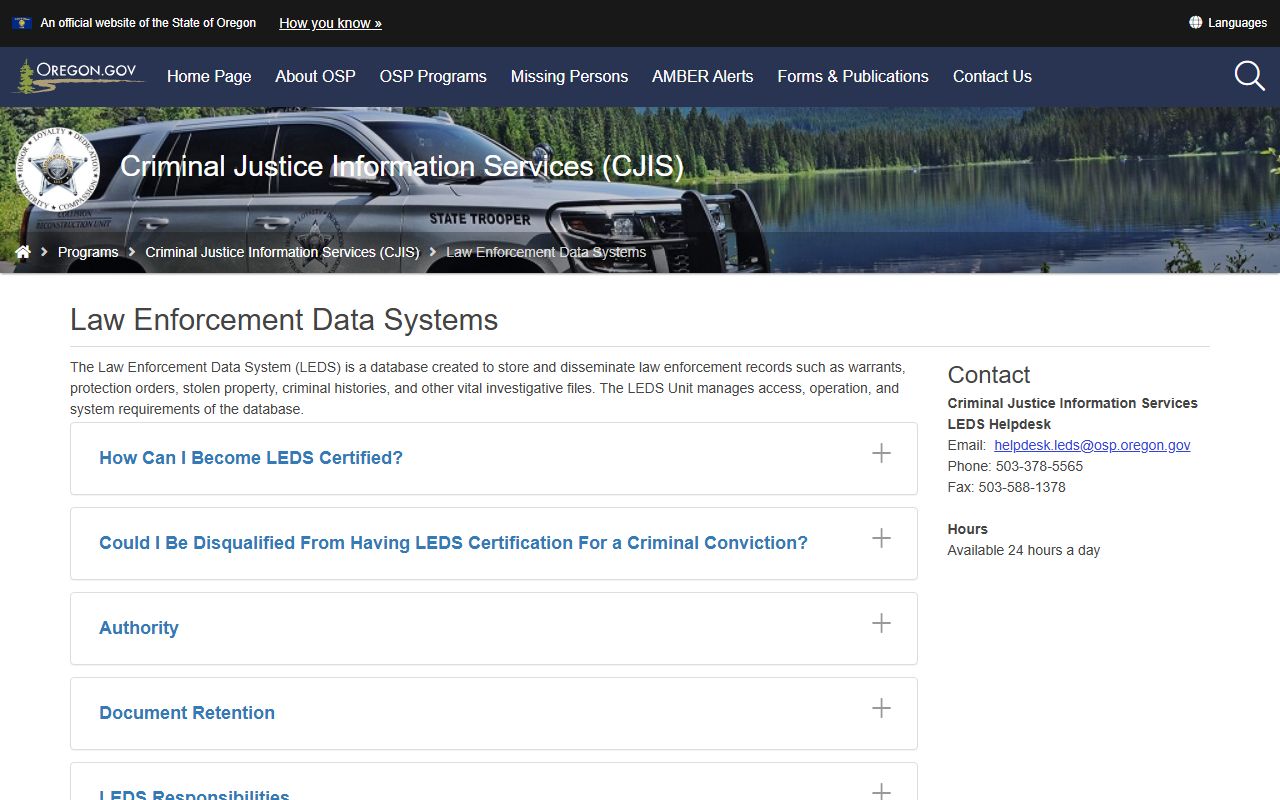
That state source confirms LEDS is relevant to warrants, while also making clear it is not a public county search screen.
What Sherman County Warrant Records Show
A public-facing warrant clue may be thinner than a full law-enforcement record. The NORCOR roster fields observed in the research include name, booking date, charges, bail, and scheduled release. Court records may show a docket event, a failure-to-appear entry, a hearing date, or a release condition. LEDS may hold law-enforcement warrant data that is not open for public browsing. Treat each source as a piece of the warrant record rather than the whole file.
| Field | What It Shows |
|---|---|
| Name | The person tied to a roster entry, court case, or warrant question. |
| Booking Date | When NORCOR booked the person into custody. |
| Charge Text | Labels such as fail to appear, bench warrant, contempt, release violation, or fugitive hold. |
| Bail | A posted amount when the roster or court has a bail figure available. |
| Scheduled Release | A listed release date when NORCOR displays one. |
| Issuing Court | The court that must usually confirm status and clearance. |
For court case outcomes beyond the warrant event, Sherman County criminal case information belongs with Sherman County criminal court records.
NORCOR Warrant Clues
NORCOR is the regional jail used by Sherman County. Its public roster is not a warrant search database, but it can show custody records that are tied to bench-warrant or failure-to-appear events. The research inspection found examples such as "FAIL TO APPEAR - BENCH WARRANT," "FUGITIVE FROM OTHER STATE - FELONY," and contempt or release-violation language. Those labels are clues to custody status, not final court outcomes.
NORCOR bail information explains that bail may be posted 24/7, that identification is required, and that Telmate processing fees can apply.
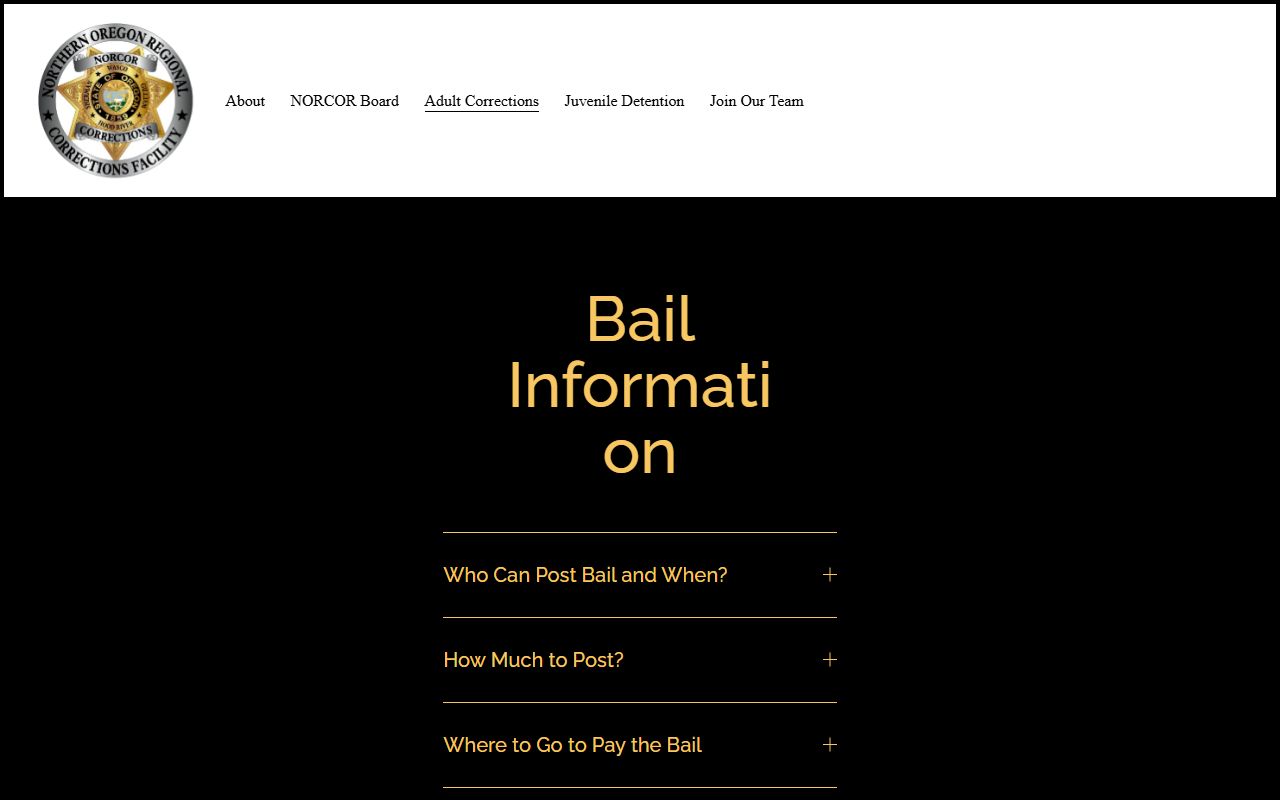
Bail details matter because paying or posting security is not always the same as clearing the warrant with the issuing court.
NORCOR phone rules also matter after an arrest because adults in custody cannot receive incoming calls and public messages use Telmate.
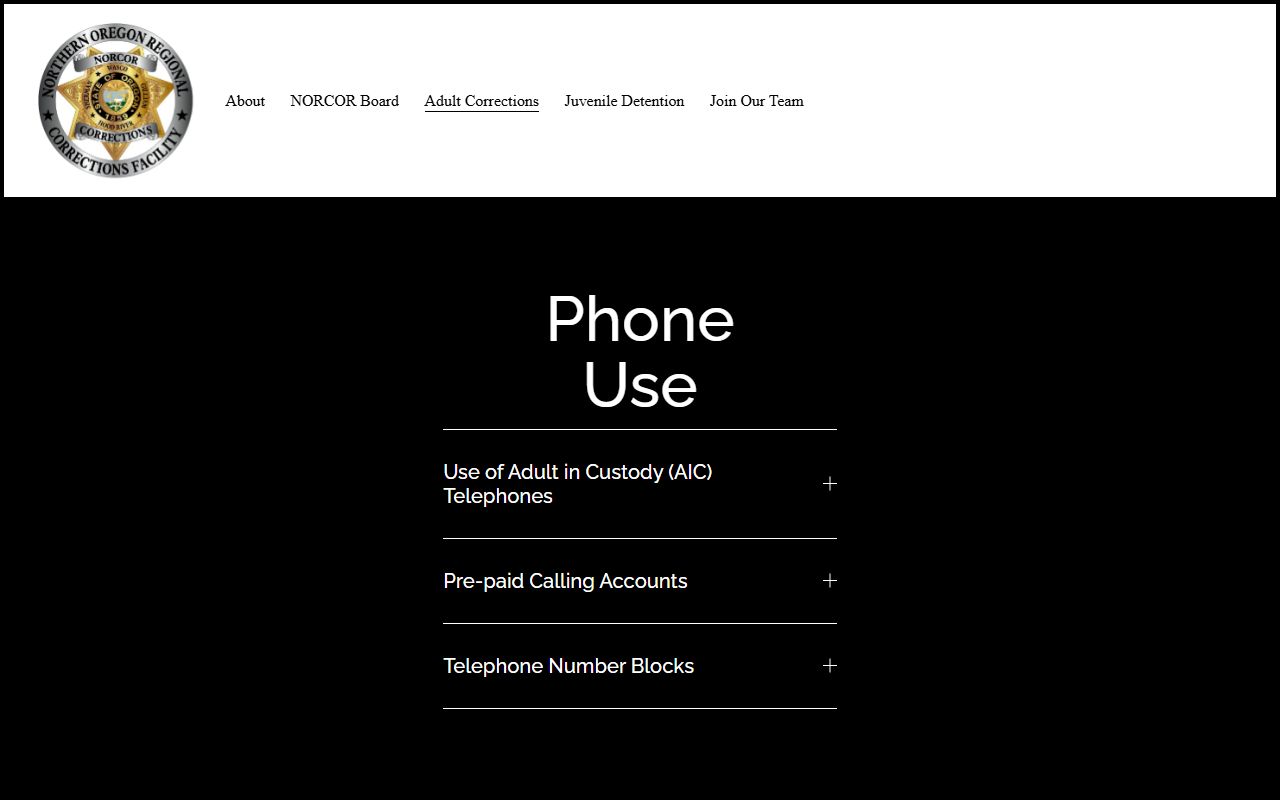
Phone limits can affect how fast family members confirm custody, bail, and court dates after a warrant arrest.
Oregon LEDS Is Not Public
Oregon LEDS is important to Sherman County warrant records because it is a statewide law-enforcement data system. The Oregon State Police source states that LEDS includes warrants and protection orders, and the Oregon administrative rules govern system use. That does not mean the public can log in and run a warrant search. It means law-enforcement and authorized users can check records that are not exposed as a public webpage.
Oregon LEDS administrative rules supply the formal rule source for system controls and authorized access.
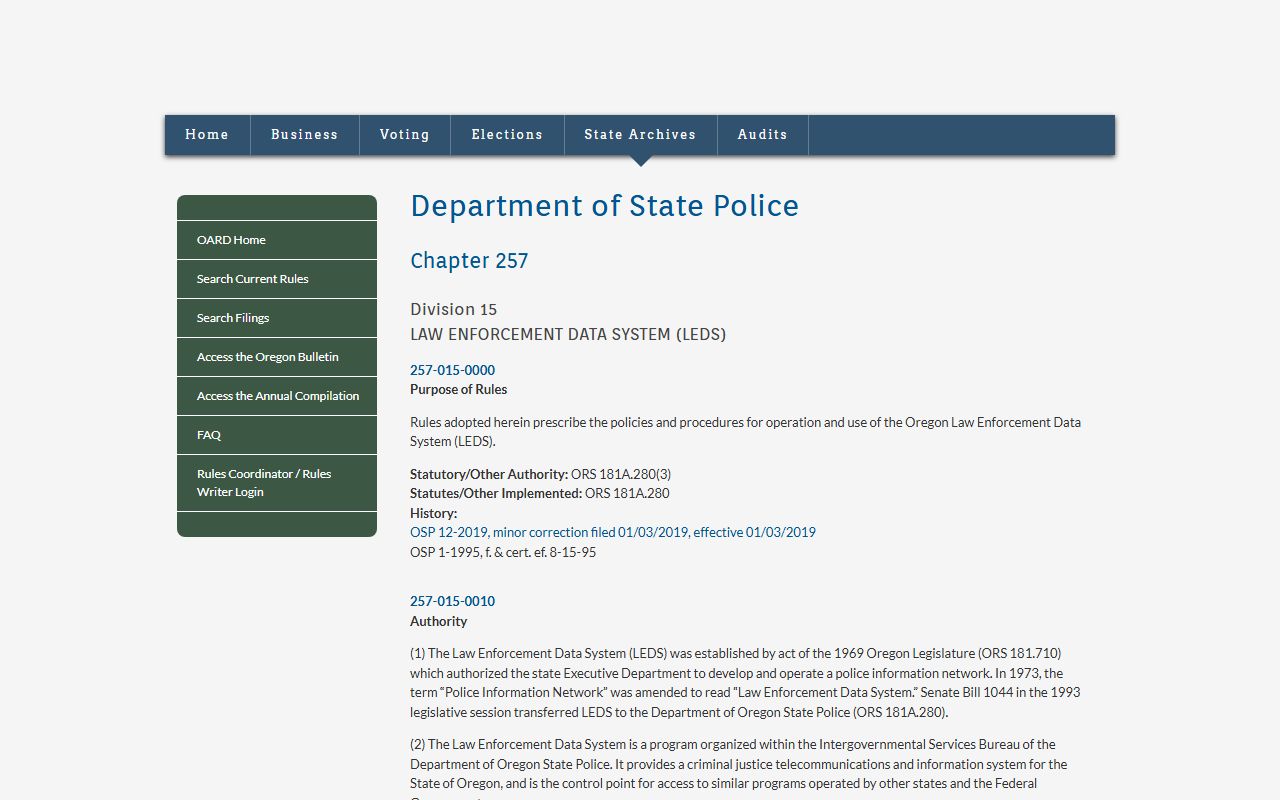
The LEDS rule source helps explain why the public fallback chain uses calls, court records, and custody checks rather than a state warrant portal.
Clearing Sherman County Warrants
Resolving a Sherman County warrant usually means working with the issuing court and, if custody is involved, NORCOR or the sheriff. Ask whether the matter requires a court appearance, whether bail or security is set, whether an attorney may appear, and whether the court will recall or clear the warrant after compliance. For Justice Court citations, the research warns that online or phone payment can block later fine reduction, diversion, or mitigation, so the plea choice should be clear before payment.
If the warrant is tied to a traffic or violation case, contact Sherman County Justice Court. If it is tied to a felony, misdemeanor, family, or civil Circuit Court case, contact Sherman Circuit Court or use OJD case-access tools to locate the file. If someone is already detained, NORCOR can confirm custody, charges, bail, and recent release status. Note: Warrant clearance can lag after payment or appearance, so confirmation from the court is the final check.
Public Record Search
Sponsored Results